If you have spent any time researching AI tools in the past year, you have probably heard the name Perplexity come up more than once. It has earned a reputation as something different from the usual wave of AI chatbots, and that reputation is largely deserved. But different does not automatically mean better, and this Perplexity AI review is going to give you the honest picture.
I have been using Perplexity regularly for several months, testing it across real research tasks, daily question-answering, document analysis, and competitive intelligence work. What follows is not a feature rundown copied from a press release. It is a practical breakdown of where this tool delivers, where it falls short, and who it actually makes sense for in 2026.
What Is Perplexity AI?
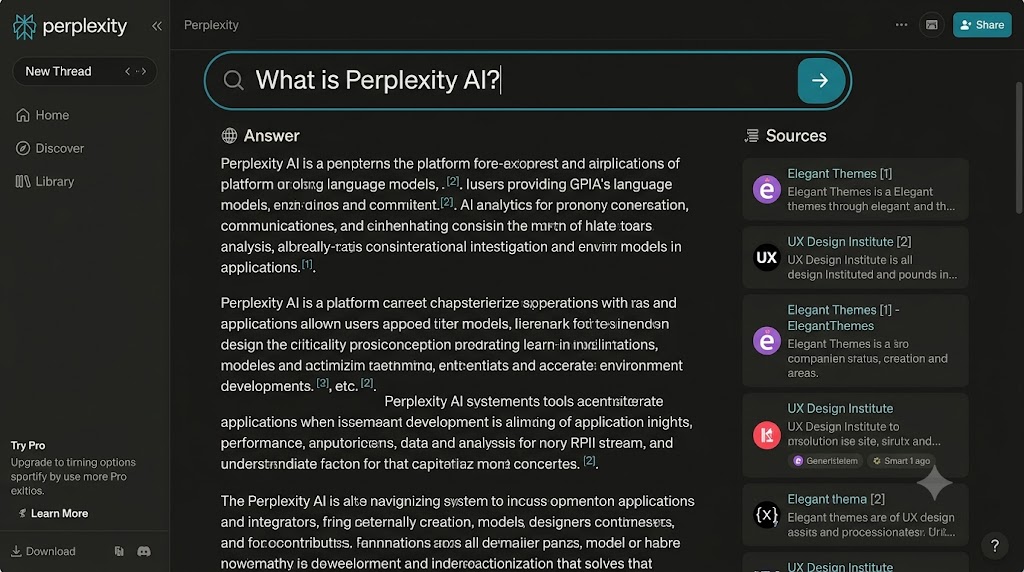
Perplexity AI is an AI-powered search and answer engine that sits somewhere between a traditional search engine and a conversational AI assistant. The core idea is simple: instead of returning a list of ten blue links the way Google does, Perplexity reads multiple web sources in real time and gives you a synthesized, written answer with clickable numbered citations so you can verify every claim.
It launched in 2022 and has grown significantly since then, attracting attention from researchers, journalists, students, and professionals who spend a lot of time digging through information online. The platform now includes specialized research modes, file upload capabilities, model switching, and even its own browser called Comet.
The reason people keep coming back to Perplexity is not because it replaces every AI tool they use. It is because it does one specific thing exceptionally well: finding current, sourced information fast.
How Perplexity AI Works
At a technical level, Perplexity combines large language models with live web search. When you submit a question, the system runs a search across the web in real time, pulls relevant content from multiple sources, and then uses the language model to synthesize a coherent answer from those sources. Each sentence in the response is tied to a specific citation, so you always know where the information came from.
This matters because it addresses one of the biggest criticisms of tools like ChatGPT: the tendency to generate confident-sounding answers that are not grounded in real sources. Perplexity builds verification directly into the response format. You do not have to take the answer on faith. You can click through to the original source in seconds.
Users can also ask follow-up questions within the same thread, which means the conversation builds context and you can narrow down complex topics without starting from scratch each time.
Key Features of Perplexity AI in 2026
Real-Time Web Search with Citations
This is the cornerstone of what Perplexity does. Every answer draws from live web results and links each claim to its source. For any research task where accuracy and currency matter, this is a genuine advantage over AI tools that only draw from training data. If something happened last week, Perplexity can surface it. If a statistic has been updated, you get the current figure rather than an outdated one.
Multi-Model Access (Pro Plan)
One of the more compelling features of the Pro plan is the ability to switch between AI models depending on the task. Rather than being locked into a single model, Pro users can toggle between GPT-4o, Claude, Gemini, and Perplexity’s own Sonar models. In practice this is useful when you need a different kind of response. Some users prefer Claude for nuanced writing-adjacent tasks, GPT for structured logic, and Sonar for fast research pulls.
Spaces for Organized Research
Spaces are essentially project folders where you can store related search threads, upload documents, and build a persistent research environment. If you are working on a long-term project, tracking a niche topic, or managing research for a client, Spaces allow you to keep everything organized without losing context between sessions.
Specialized Focus Modes
Perplexity offers several focus modes that filter results by source type. The Academic mode surfaces published research papers rather than general web results. The Finance mode pulls in real-time stock data and financial filings. There are also modes focused on Reddit discussions, YouTube, and standard web search. Switching modes dramatically improves result quality when you know where the best sources for your question are likely to live.
File Upload and Document Analysis
The Pro plan allows you to upload documents including PDFs and images, and then ask questions about the content. This is useful for quickly pulling key data from lengthy reports, contracts, or presentations without reading every page. It is not the deepest document analysis tool available, but it handles straightforward extraction tasks reliably.
Deep Research Mode
Perplexity’s Deep Research feature takes a complex question, breaks it into subtasks, and runs a more thorough multi-source investigation before producing a structured report. Users who have tested this feature for competitive analysis, market research, and academic background work report that it surfaces more useful angles than a standard search query.
Comet Browser
Perplexity has also released Comet, a browser that integrates Perplexity as a default search experience and adds AI agent-style browsing features. It is still relatively new, but it signals the direction the company is heading: tighter integration between AI and everyday browsing rather than a standalone tool you visit separately.
Perplexity AI Pricing Plans
Perplexity offers two main tiers: a free plan and a Pro subscription.
The free plan is more generous than many people expect. It gives you unlimited standard searches with real-time web citations, access to the default Perplexity model, follow-up conversations within threads, and the mobile app. Most casual users will find the free tier covers their needs without any upgrade required.
The Pro plan costs $20 per month or $200 per year, which works out to roughly $16.67 per month if you commit to the annual option. At that price you get unlimited Pro model queries, the ability to switch between GPT-4o, Claude, and Gemini, file upload and document analysis, enhanced image generation, Spaces for organized research, access to premium data sources including CB Insights and PitchBook, and priority support.
For users who do meaningful research work daily, the Pro plan tends to pay for itself quickly in time saved. For casual users who ask a few questions here and there, the free tier is almost certainly enough.
Perplexity AI Comparison Table
| Feature | Perplexity Free | Perplexity Pro | ChatGPT Plus | Google AI Pro |
|---|---|---|---|---|
| Price | Free | $20/month | $20/month | ~$25/month |
| Real-Time Web Search | Yes (standard) | Yes (enhanced) | Yes | Yes |
| Source Citations | Yes | Yes | Limited | Limited |
| Model Switching | No | Yes (GPT, Claude, Gemini) | No | No |
| File Upload | No | Yes | Yes | Yes |
| Focus Modes | Basic | Full (Academic, Finance, etc.) | No | No |
| Image Generation | No | Yes | Yes | Yes |
| Organized Workspaces | No | Yes (Spaces) | Projects | No |
| Premium Data Access | No | CB Insights, PitchBook | No | No |
| Best For | Casual research | Deep research, analysis | Writing, creative tasks | Google ecosystem users |
Perplexity AI Pros and Cons
What Works Well
Source transparency is genuinely useful. Every claim in every answer comes with a numbered citation. For high-stakes research where you cannot afford to rely on an AI hallucination, this design choice makes Perplexity significantly more trustworthy than tools that produce confident answers with no sourcing.
Real-time information changes the game for current events. Because Perplexity searches the web live rather than relying purely on training data, it handles questions about recent news, regulatory changes, and current pricing in a way that static AI tools simply cannot match.
The free tier is actually usable. Many AI tools cripple the free experience to push upgrades. Perplexity’s free plan gives you unlimited standard searches, which is more than enough for regular users who are not doing heavy professional research.
Multi-model access on Pro is a practical advantage. Being able to switch models within the same interface without managing multiple subscriptions is a genuine productivity benefit, especially for users who have developed preferences for specific models on specific task types.
Clean, distraction-free interface. The experience of using Perplexity is notably free of the noise that clutters most web searches. No ads, no sponsored results, no SEO-stuffed pages to wade through. You ask a question, you get an answer, you verify the sources.
Where It Falls Short
Writing and long-form content generation is not its strength. Perplexity is built for research and synthesis. If your primary use case involves generating blog posts, marketing copy, or creative writing, dedicated tools like Claude or ChatGPT are better suited for that work.
Coding assistance is limited. Complex programming tasks are outside what Perplexity does well. It is not competing with GitHub Copilot or code-focused AI tools.
Citation accuracy is not perfect. Studies have shown that Perplexity occasionally misattributes claims or pulls information slightly out of context from cited sources. This is not unique to Perplexity among AI tools, but it does mean you should always click through to verify important claims rather than taking the synthesized answer at face value.
Context handling in long threads degrades. Some users have reported that very long conversation threads start to lose context from earlier exchanges, requiring re-explanation of background information. This is a known limitation that the platform is working to address.
Customer support has not kept pace with growth. Multiple users have noted that resolving subscription issues or technical problems takes longer than it should, particularly around billing. This is worth knowing before you commit to an annual plan.
Who Is Perplexity AI Best For?
Researchers and academics who need cited, verifiable sources on current topics will find Perplexity faster and more reliable than a manual Google search for background research.
Journalists and fact-checkers benefit from the citation-first design, which makes it easier to trace claims back to original sources before publishing.
Business analysts and competitive intelligence professionals can use Perplexity to monitor industry news, track competitor activity, and build research briefs on specific topics faster than manual monitoring.
Students doing background research for papers or projects will find Perplexity’s Academic mode particularly useful for surfacing published work rather than generic web content.
Content creators who need to verify facts and find current statistics as part of their research workflow will save time compared to running separate searches for every data point.
Casual users who simply want better, less cluttered answers to everyday questions will find the free plan more than adequate.
Who should look elsewhere: If you primarily need a writing assistant, a coding partner, or a creative brainstorming tool, the category leaders for those tasks will serve you better.
Perplexity AI vs ChatGPT: The Real Difference
This comparison comes up constantly, and the honest answer is that they are built for genuinely different things rather than being direct substitutes.
Perplexity is optimized for research-based queries where current information and source transparency matter. It pulls from the live web on every query, cites every answer, and is designed to help you find and verify information quickly.
ChatGPT is optimized for generation. It is stronger at creative writing, long-form content, complex reasoning, and conversational depth. Its web search capability exists but citation transparency is not the central design principle.
Most serious users of AI tools end up running Perplexity alongside ChatGPT or Claude rather than treating them as competing options. Each handles what it does well. If you find yourself doing both kinds of work regularly, a Perplexity Pro subscription paired with a ChatGPT Plus or Claude Pro account covers almost every professional AI use case.
Real-World Performance: What I Actually Found
After months of regular use, a few patterns became clear.
For factual questions with current answers, Perplexity is faster and more reliable than any alternative I tested. Asking about interest rates, policy changes, recent product launches, or current pricing takes seconds and produces a cited answer that would have taken several minutes of manual search to replicate.
For product research, the no-ads experience is a meaningful improvement over Google. When searching for specific tools or products, Perplexity gives you actual comparative information rather than a page of sponsored listings dressed up as organic results.
For niche technical topics, results can be inconsistent. The depth of indexing varies by subject area, and some narrow technical questions surface fewer useful sources than a well-structured Google search would.
For writing tasks, I consistently returned to Claude or ChatGPT. Perplexity can draft short summaries, but it is not where you want to do serious content work.
The overall picture is a tool that delivers genuine value for its intended purpose, with clear limitations outside that purpose. That is a more honest framing than most AI tool reviews offer.
Frequently Asked Questions
Is Perplexity AI free to use?
Yes. Perplexity offers a free plan that includes unlimited standard searches with real-time web citations, follow-up conversations, and access to the mobile app. There is no credit card required to get started. The free tier is genuinely usable for casual research and everyday questions.
How much does Perplexity Pro cost?
Perplexity Pro costs $20 per month. The annual plan is priced at $200 per year, which works out to roughly $16.67 per month. The Pro plan includes unlimited Pro model queries, multi-model access (GPT-4o, Claude, Gemini), file uploads, Spaces, image generation, premium data access, and priority support.
Is Perplexity Pro worth the money in 2026?
For users who regularly do research-intensive work, yes. The time saved on sourcing, verifying, and synthesizing information makes the $20 monthly cost easy to justify within the first week for most professionals. For casual users who ask a few questions per day, the free tier is usually sufficient.
How does Perplexity AI differ from Google Search?
Google returns a ranked list of links to web pages. Perplexity reads those pages and writes a synthesized answer with citations, so you get the key information immediately without clicking through multiple sources. Perplexity is not trying to index everything on the web the way Google does. It is focused on giving you the best synthesized answer from the most relevant sources.
Can Perplexity AI replace ChatGPT?
Not entirely, and the two tools work better as complements than substitutes. Perplexity excels at real-time research with cited sources. ChatGPT excels at writing, creative tasks, and complex reasoning. Heavy users of both tools typically keep subscriptions to both rather than choosing one.
Does Perplexity AI make things up?
Like all AI tools, Perplexity can misinterpret sources or draw incorrect conclusions from real data. However, its citation-first design makes it significantly easier to spot and verify questionable claims compared to AI tools that produce unsourced answers. Always click through to the original source on high-stakes information.
What is Perplexity Comet?
Comet is a web browser built by Perplexity that integrates the platform directly into the browsing experience. It uses Perplexity as the default search engine and includes AI agent features that can take actions on web pages on your behalf. It is currently available to a limited set of users and is positioned as an alternative to Chrome for users who want AI deeply embedded in their daily browsing.
Is Perplexity AI safe to use for sensitive research?
Perplexity’s standard and Pro tiers process queries on its servers, and the company notes that free-tier queries may be used to improve the service. For highly sensitive or confidential research, review Perplexity’s current privacy policy carefully before uploading documents or submitting queries that contain proprietary information. The Enterprise Pro tier offers enhanced data handling commitments for organizations with stricter requirements.
Final Verdict
Perplexity AI has earned its reputation as one of the most useful research tools available in 2026. It does not try to be everything. It focuses on doing one thing, sourced, real-time research with citation transparency, and it does that thing better than most of its competitors.
The free plan is legitimately useful and a low-risk way to find out whether the tool fits your workflow. The Pro plan at $20 per month is a reasonable investment for anyone who spends meaningful time tracking information, verifying facts, or conducting research as part of their daily work.
It will not replace your writing tools, your coding assistant, or your general AI chatbot. But for research and information gathering, it is one of the better $20 per month you can spend on AI tooling in 2026.
Start with the free plan, use it for two weeks on real tasks, and you will know quickly whether the Pro upgrade makes sense for you.
Have you used Perplexity AI? Share your experience in the comments below. If you found this Perplexity AI review helpful, you might also want to read our comparison of the best AI tools for content research or our hands-on ChatGPT review.